
.png)
For decades, executive communication travelled through institutions. Press releases, earnings calls and approved statements carried the company line. The organisation spoke; the leader appeared when necessary.
That model is weakening. People increasingly want to hear from those making decisions, not the institutions announcing them.
Audiences now encounter brands in feeds shaped by individuals. At the same time, AI has made polished content effortless to produce. Corporate messaging may be more abundant, but it is also easier to ignore. What feels scarce is a credible human signal: someone with responsibility, experience and a point of view.

From Spokesperson to Creator
More CEOs, founders, CMOs and senior leaders are becoming content creators. Not by building audiences around lifestyle, but around expertise. The number of creators on LinkedIn has nearly doubled since 2021, reflecting the platform’s growing role as a home for professional, knowledge-led influence.
They share leadership lessons, market patterns, difficult trade-offs, behind-the-scenes decisions and observations from the work. Their advantage is proximity to decisions, pattern recognition and the willingness to explain what they have learned.
A Refine Labs benchmark found personal LinkedIn profiles generated five times more engagement than company pages, while LinkedIn reports that engaged employees can influence eight times more Page views. People-led communication travels differently because it is attached to someone who can be questioned, challenged and remembered.

When a Leader Changes the Temperature
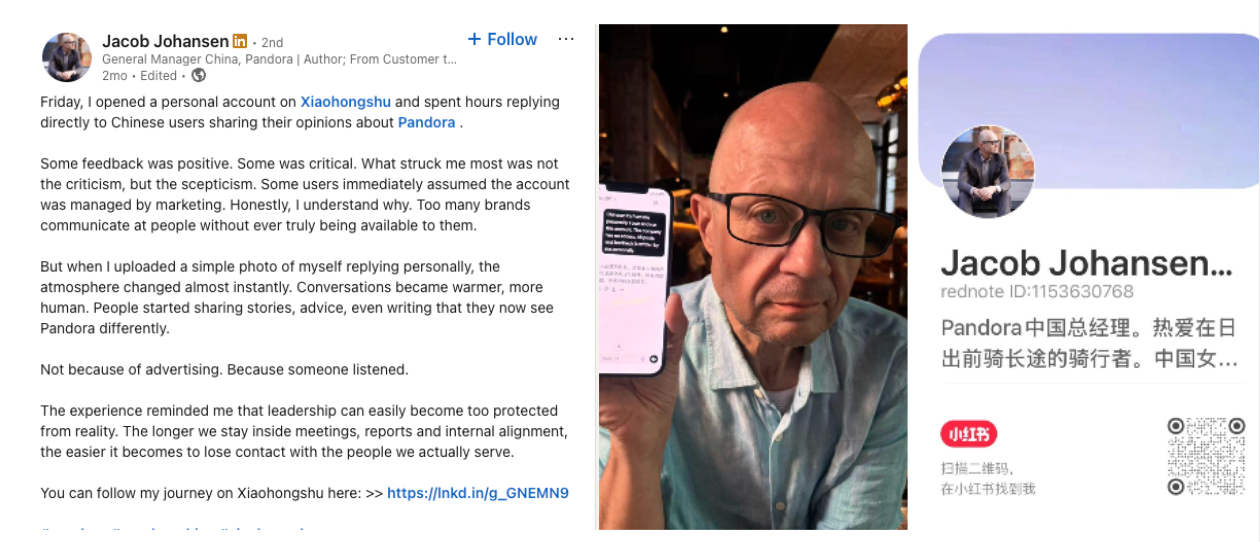
Pandora China General Manager Jacob Johansen opened a personal Xiaohongshu account and replied directly to Chinese users. Some assumed it was being run by marketing. After he shared an image showing that he was responding himself, the atmosphere changed. Criticism remained, but scepticism softened. People shared stories, offered advice and said they saw Pandora differently.
This is cultural relevance in practice. Relevance now extends beyond pop culture into identity, community and emotional connection. It comes from entering a community, listening in its own space and showing the company is connected to the people it serves. Done well, executive content creates a live feedback loop between culture and the boardroom.
The Business Impact of Being Human
Executive visibility shapes how audiences interpret the company.
Candidates see how leaders think and what behaviour the organisation rewards. Employees gain context around decisions. Customers encounter expertise before a sales conversation. Investors see how leadership interprets change. Thought leadership is increasingly recognised as a tool for building trust, influencing decision-makers and opening doors that conventional marketing cannot.
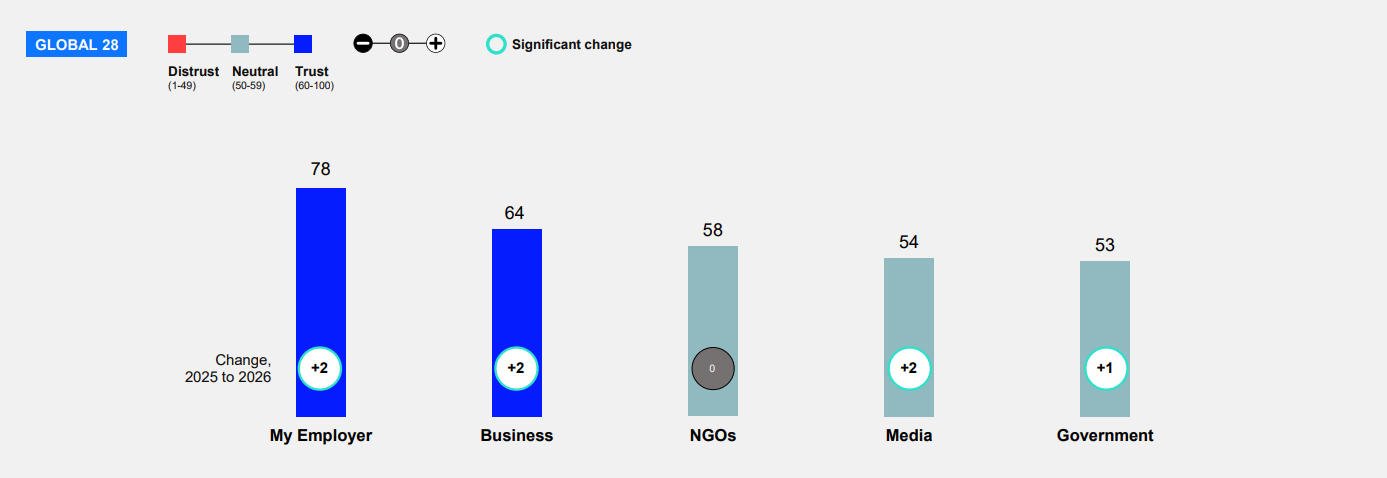
In Edelman’s 2026 Trust Barometer, “my employer” remained the most trusted institution, with 78% trust among employees. That trust needs visible people to carry it.
A consistent executive voice can strengthen recruitment, retention, customer confidence, internal culture and industry authority. It turns leadership into a source of brand meaning.
Visibility Is a Leadership Test
Showing up online does not automatically create trust. It can also expose distance.
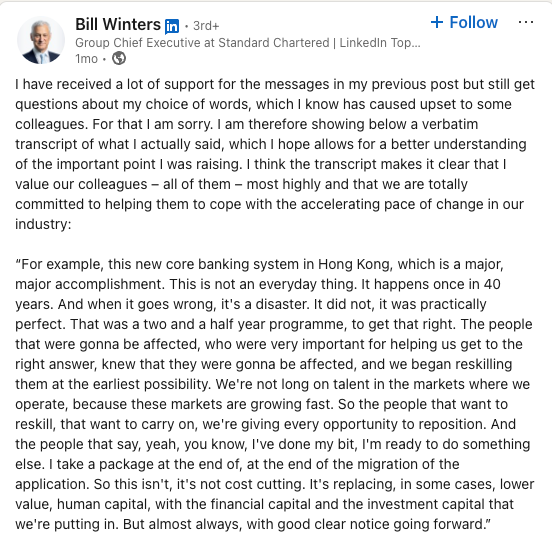
When Standard Chartered Group Group Chief Executive, Bill Winters used the phrase “lower-value human capital” while discussing AI-led job reductions, his later clarification on LinkedIn drew continued criticism. The reaction showed how quickly executive language can reveal a gap between strategic framing and employees’ lived reality.
Visibility magnifies empathy, judgement and cultural literacy—and their absence. The more human the channel, the more human the communication must feel.
The Voices That Will Win
The strongest executive voices are the ones who show up consistently, speak with conviction and create value long before asking for anything in return.
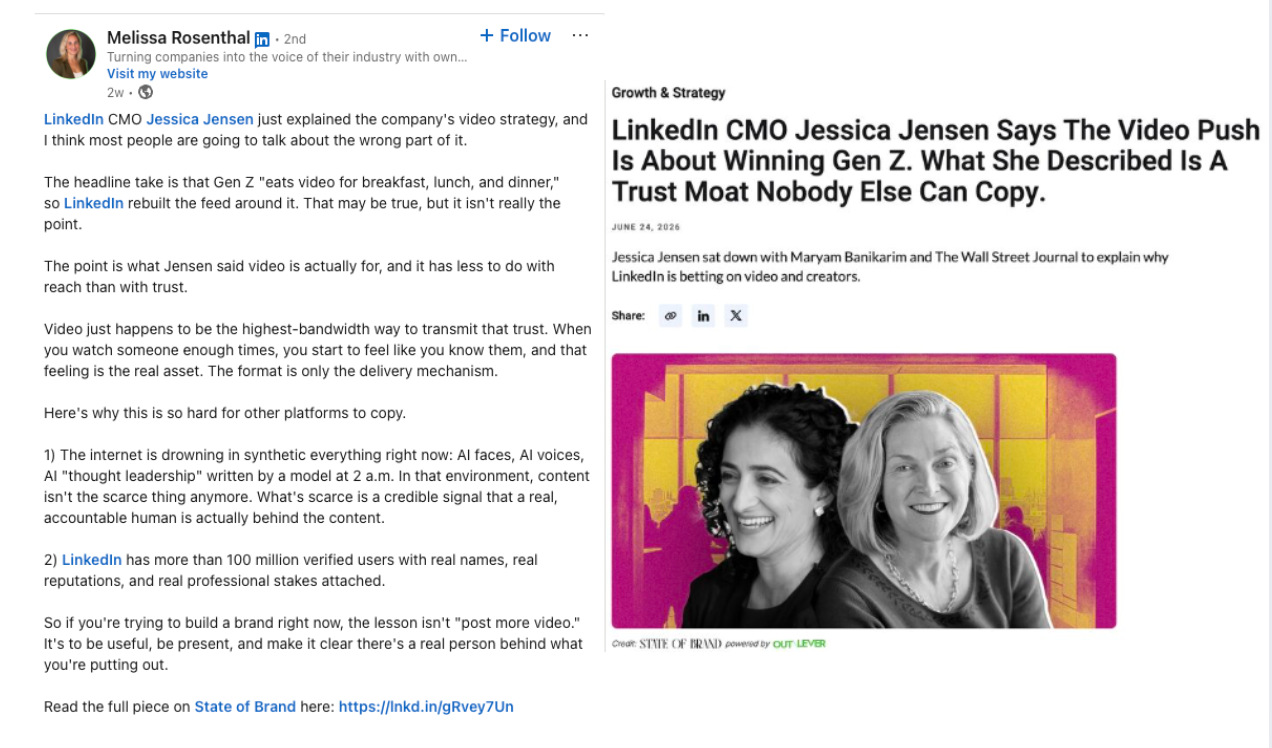
Melissa Rosenthal’s reading of LinkedIn CMO Jessica Jensen’s video strategy captures the shift. The real value of a human face is not simply reach; repeated exposure builds familiarity and trust. In an internet crowded with AI faces, voices and generated thought leadership, professional accountability becomes a scarce signal.
The content cannot feel like corporate copy moved onto a personal profile. It should reveal how a leader thinks: what they noticed, what changed their mind, what they learned and what they are still working through.
The corporate brand still matters. But its most powerful expression may increasingly be the leader willing to stand behind it in public.
When executives show up with honesty, context and genuine curiosity, they do more than build a durable audience. They make the company feel human, culturally present and easier to trust. That is leadership as brand strategy.
Resources:
- https://www.refinelabs.com/article/personal-linkedin-engagement-vs-company-page?
- https://www.edelman.com/news-awards/2026-edelman-trust-barometer-society-slides-into-insularity?
.png)