
.png)
AI marketing platforms increasingly offer the same promise: upload writing samples, choose a handful of personality traits and let the system produce content in your brand voice.
The appeal is obvious. Voice becomes infrastructure. Emails, social posts, landing pages and thought leadership can all sound consistent, regardless of who writes them or how quickly they are produced.
That consistency has exposed a weakness that existed long before AI entered the workflow. Many brand voice guides were built around the same set of adjectives: professional, trustworthy, innovative, human, approachable.
These words describe acceptable brand behaviour. They rarely create an identity audiences can recognise.
Human writers used to disguise this weakness. They brought references, judgement, taste and occasional resistance to the brief. Small acts of interpretation gave the work texture. AI removes much of that variation. It follows the guide repeatedly, efficiently and at scale.
The result is generic language with an industrial production system behind it.
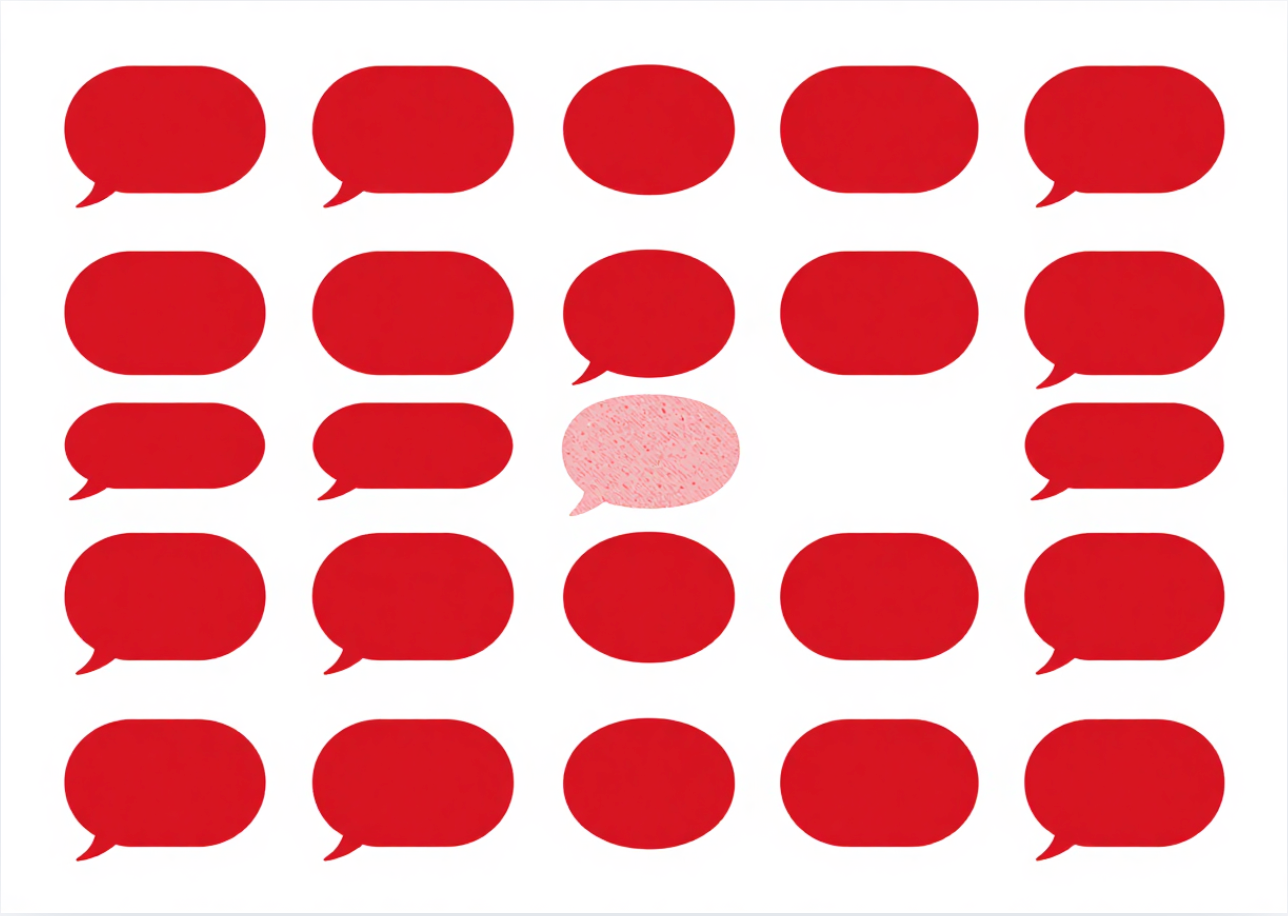
Consistency Can Scale the Wrong Thing
Brand teams often treat consistency as a measure of strength. Yet consistency only creates value when the material being repeated is distinctive.
A recognisable phrase, rhythm or point of view can become a verbal brand asset over time. Repetition strengthens memory because audiences can connect the language to a specific sender.
Generic language behaves differently. When every touchpoint sounds polished, balanced and broadly agreeable, the content may feel appropriate while remaining ownerless. The audience understands the category, but learns little about the brand.
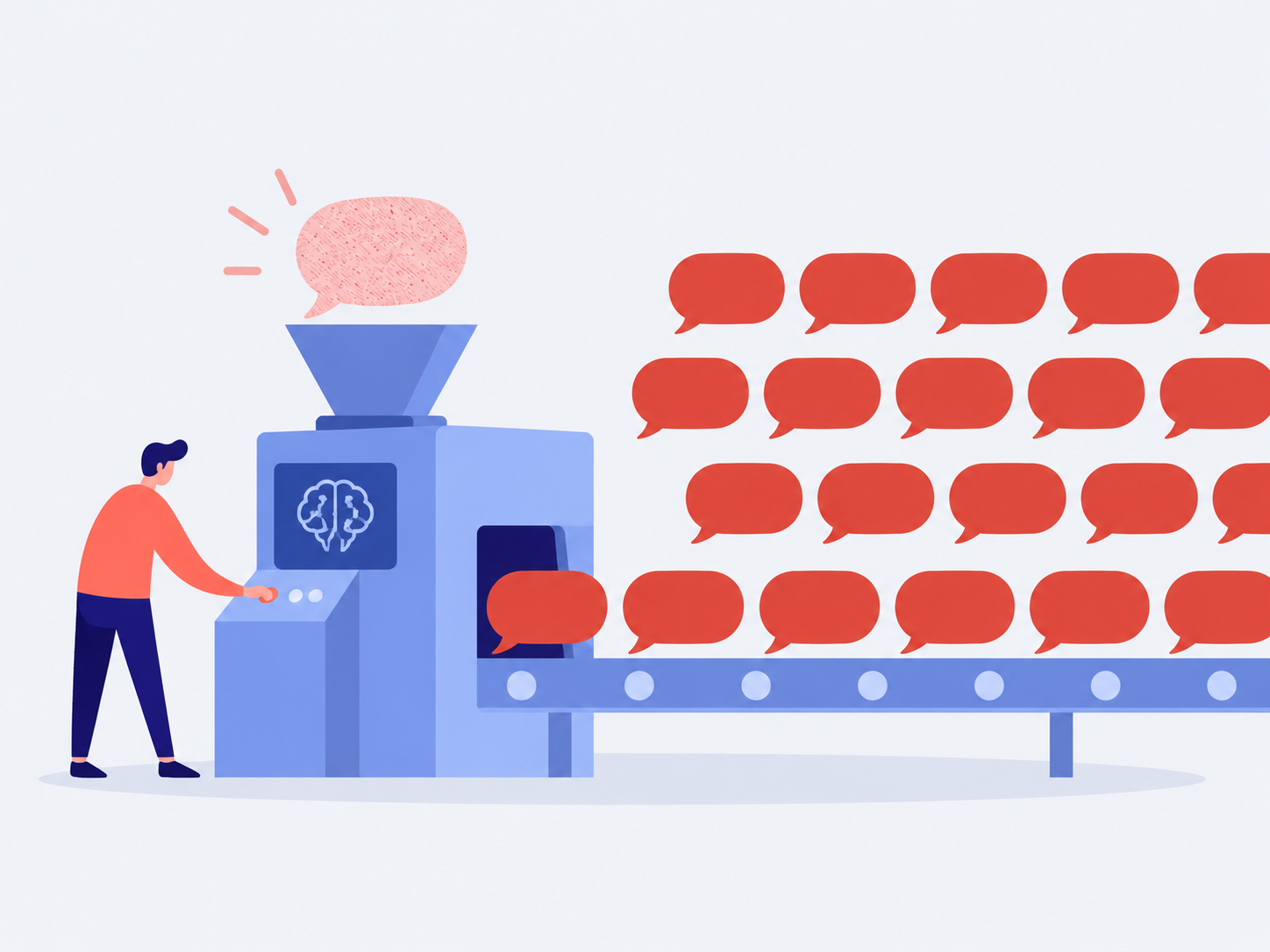
AI intensifies this effect. It turns category conventions into defaults and applies them across every channel. What once appeared as an occasional bland paragraph becomes a complete verbal identity system.
The brand achieves consistency without building recognition.
Voice Is a Record of Decisions
Distinctive voice begins with the choices a brand makes.
What does the brand believe about its category? Which familiar assumptions does it challenge? Whose interests does it protect when priorities compete? What will it refuse to say, even when the language performs well?
These decisions shape communication more reliably than adjectives.
A financial brand that believes complexity often hides weak thinking will favour plain language, direct explanations and visible proof. A luxury brand that sees mystery as part of the value will reveal less, slow the pace and resist over-explanation. Both may call themselves “confident”, yet their confidence should sound completely different.
Voice becomes identifiable when it carries the logic of the brand.
The Adjective Trap
The problem with adjectives is their range. “Bold” can mean provocative claims, short sentences, irreverent humour or visual drama. “Human” can mean warmth, vulnerability, informality or conversational filler.
Without deeper guidance, an AI system selects the safest and most familiar version.
A stronger voice document should capture beliefs, decisions, tensions and evidence. It should show what the brand praises, challenges, defends and refuses. It should include examples from real behaviour, alongside language that would feel out of character.
Context matters too. A launch, a customer complaint and a company setback should not share the same emotional temperature. Coherence comes from one worldview responding appropriately to different situations.
This turns the guide into a decision-making system rather than an adjective list.

Personal Brands Have More at Stake
For personal brands, generic voice carries higher stakes because the content is presented as evidence of an individual’s thinking.
A founder, executive or specialist builds authority through judgement: what they notice, how they interpret events, where they disagree and which experiences shaped their view. When AI smooths those signals into polished professional language, authorship becomes harder to feel.
The content may remain useful. The person becomes interchangeable.
A useful personal voice guide should capture recurring beliefs, natural phrases, lived examples, areas of conviction and the degree of certainty the person is comfortable expressing. It should preserve the edges that make the perspective recognisable.
Personal reputation grows when audiences can identify the mind behind the message.

Build the Voice Before You Scale It
AI brand voice tools can protect terminology, reduce drift and help large teams communicate coherently. Their value depends on the source they are asked to enforce.
Before a brand trains a platform, it needs to codify its worldview: how it sees the market, which decisions prove that position and how those beliefs change the way it communicates.
The race towards perfect consistency will make conviction more valuable. The brands that remain recognisable will be the ones that gave their systems something recognisable to preserve.
A voice worth scaling begins long before the first prompt.

References:
- https://www.linkedin.com/posts/melissarosenthal5_every-ai-marketing-platform-now-sells-a-brand-activity-7482539359343230976-DMPm/
- https://www.thestateofbrand.com/news/brand-voice-ai-software-adjective-list-great-flattenin
- https://knowledge.hubspot.com/branding/set-up-brand-voice-using-ai
- https://help.jasper.ai/hc/en-us/articles/18618693085339-Brand-Voice
- https://writer.com/blog/voice-feature/
- https://www.typeface.ai/education/typeface-academy/write-copy-in-your-brand-voice
- https://www.science.org/doi/10.1126/sciadv.adn5290
- https://www.edelman.com/sites/g/files/aatuss191/files/2025-07/2025%20Edelman-LinkedIn%20B2B%20Thought%20Leadership%20Impact%20Report_FINAL.pdf
.png)
.png)