
.png)
Everyone has a personal brand. Yes, your pets too believe it or not.
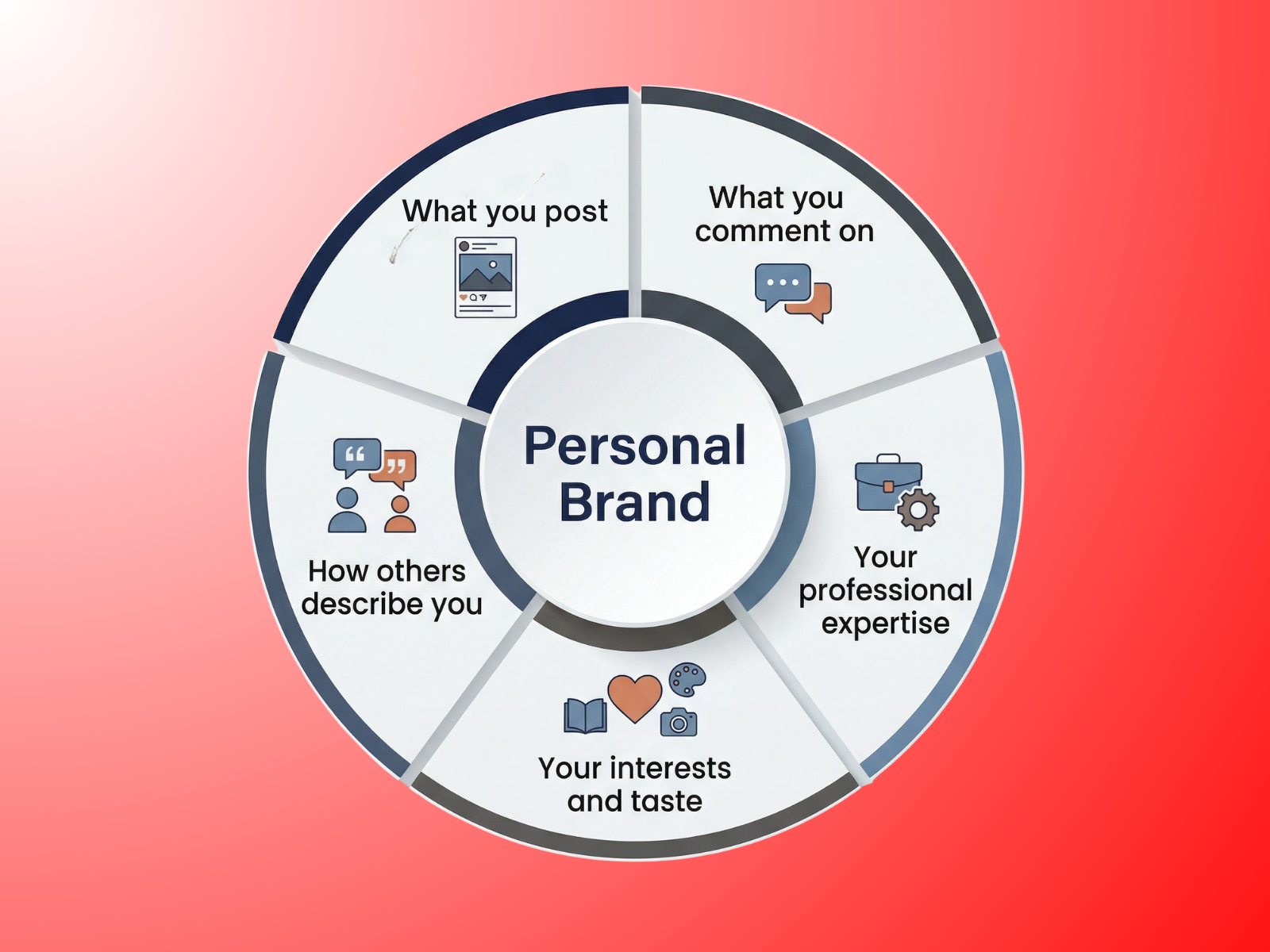
It forms through what you share, what you say and what people associate your name with online. A LinkedIn post, an Instagram story or even a comment in a discussion thread contributes to how others perceive your expertise, interests and personality.
In a digital environment where visibility is constant, reputation forms quietly but quickly. The real question is not whether a personal brand exists. It is whether it is being shaped intentionally.
LinkedIn and the Rise of the Visible Professional
LinkedIn has become the primary platform for professional personal branding.
What began as a digital résumé has evolved into a live stream of ideas, experiences and perspectives from founders, operators and specialists across industries. Professionals increasingly use the platform to share insights from their work, reflect on lessons learned and contribute to conversations shaping their fields.
Successful profiles rarely rely on announcements alone. Instead, they treat the platform as a space for thought leadership.

A useful framework that often appears among high performing profiles is the 10–80–10 rule. Around ten percent of content shares personal stories or moments from professional journeys. Eighty percent focus on educational insights, frameworks or lessons others can learn from. The final ten percent promotes products, services or achievements.
This balance allows professionals to demonstrate expertise without appearing promotional. Over time, consistent perspectives help audiences associate a person with a specific domain of knowledge.
Visibility becomes credibility.
Personal Identity on Instagram
If LinkedIn emphasises expertise, Instagram highlights identity.
Creators build personal brands not only through what they know but also through how they see the world. Visual storytelling, aesthetic choices and tone of voice all contribute to how audiences perceive them.
This makes personality and taste central elements of the brand.
Some creators cultivate aspirational communities, presenting a lifestyle others admire or hope to achieve. Their content emphasises aspiration, inspiration and visual polish.
Others build relatable utility communities, where audiences follow because they trust the creator’s taste, recommendations or practical advice. These creators often feel closer to their audiences because their content focuses on everyday usefulness rather than idealised presentation.
Both approaches rely on the same underlying dynamic. People follow individuals whose perspective feels distinctive and recognisable.
The Strength of Micro Communities
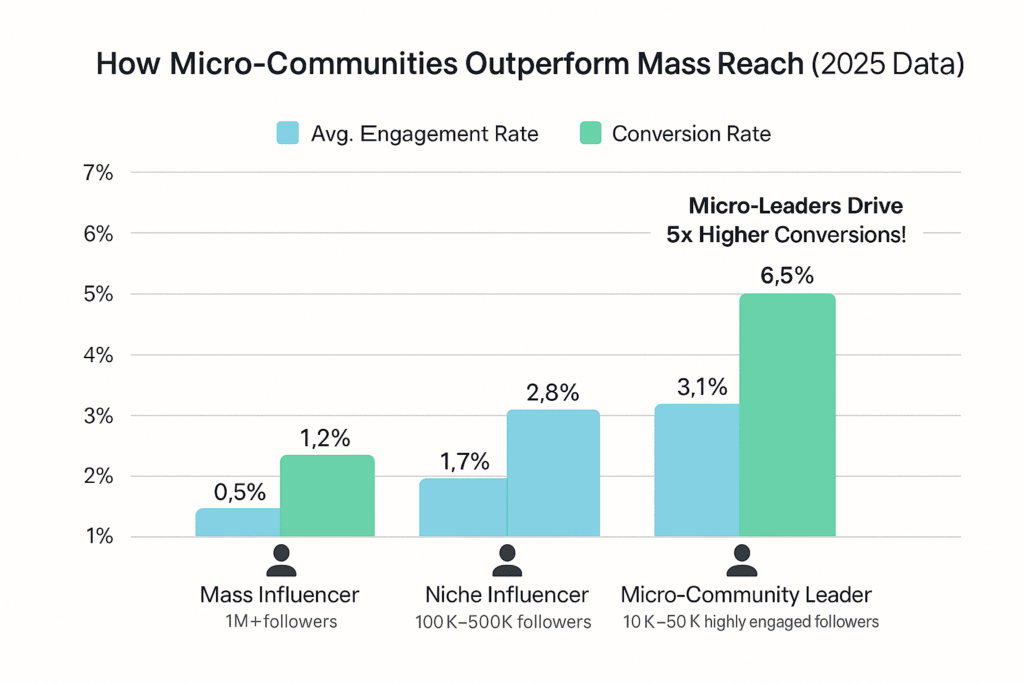
Audience size does not always reflect influence.
Many creators with smaller followings cultivate deeply engaged micro communities. These groups often interact regularly through comments, shared references and recurring content formats. Over time, the audience becomes less like a crowd and more like a network of familiar participants.
Smaller communities tend to produce stronger trust and more meaningful conversations. Engagement becomes denser because the audience feels aligned with the creator’s worldview or expertise.
For brands, this dynamic explains why partnerships with niche creators can often produce stronger cultural resonance than collaborations with much larger but less connected audiences.
Trust travels through people, not just platforms.
Personal Brands as Filters
The explosion of online content has changed how people decide what deserves their attention.
Instead of scanning everything available, audiences increasingly rely on individuals they trust to filter information. A respected founder explaining industry shifts, a designer sharing visual references or a creator recommending products becomes a shortcut for decision making.
Personal brands function as curators.
People follow individuals whose perspectives consistently align with their own interests or values. Over time, these voices become trusted sources within specific communities.
The Personal Brand Advantage in the AI Era
Another shift is quietly strengthening the value of personal brands.
Artificial intelligence has made content production easier and faster than ever. Articles, captions and summaries can now be generated in seconds. As a result, the supply of information continues to grow rapidly.
What becomes scarce in this environment is lived experience.
A personal brand is not simply a collection of ideas. It reflects experiences, lessons and perspectives shaped by real work, failures, observations and decisions. These signals of authenticity cannot easily be replicated by automated systems.
In this sense, the role of a personal brand is evolving.
It is no longer just a platform for sharing knowledge. It is a platform for sharing context, perspective and experience.
Using the Brand You Already Have
Personal branding is often misunderstood as self promotion.
In reality, it is closer to clarity. It is the process of communicating what you care about, what you understand deeply and how you interpret the world around you.
Everyone already communicates these signals in some form. The opportunity lies in recognising them and shaping them deliberately.
When people consistently share thoughtful perspectives and experiences, their personal brand gradually becomes a point of reference for others navigating the same spaces.
In an online landscape filled with information, the voices that stand out are rarely the loudest.
They are the ones people trust to interpret what matters.
.png)
.png)